

The MBTA has made important strides. It increased its operating staff by 1,200 since June 2022 and has improved its handling of safety and service issues that have plagued the Authority for several years. However, it still has a long uphill climb. The FY 2025 budget estimates the Authority needs approximately 8,000 operating personnel to run current service levels and support all safety initiatives, meaning that it must increase headcount by another 1,000 or more from the latest figures (Appendix). That comes at a cost.
April 02, 2024
TRANSPORTATION
Ticket to Transformation? Evaluating the MBTA's Efforts to Bolster its Workforce

Workforce challenges at the MBTA have received extensive reporting in recent years. Those challenges took on a new sense of urgency in 2022 when a safety management inspection by the Federal Transit Administration (FTA) found that the MBTA needed to expand the size, training, and supervision of its workforce so that it could operate, maintain, and deliver capital projects safely.
February 26, 2024
BUDGET & TAXES > Budget > FY 2025
Fiscal Year 2025 Budget: Transportation Funding
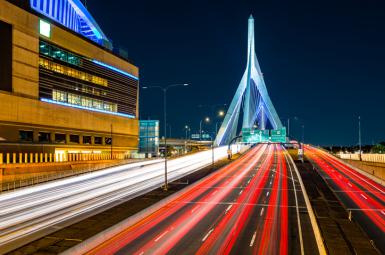
The Healey administration filed its Fiscal Year (FY) 2025 budget proposal on January 24th, totaling $58.13 billion. The spending plan includes critical investments in healthcare and education, as well as a notable funding increase for transportation supported by new income surtax revenues.
December 20, 2023
TRANSPORTATION
The Path to a Safe and Reliable Transit System Just Got a Lot Longer

On November 16, the MBTA presented an updated analysis of its State of Good Repair (SGR) Index, which measures the Authority’s capital asset needs, to the Board of Directors (here) in which it revised the SGR Index to
December 04, 2023
BUDGET & TAXES > Budget > FY 2025
FY 2024 AND FY 2025 TAX REVENUE FORECAST – THE SLOWDOWN CONTINUES

Tax revenues for Fiscal Year (FY) 2024 and FY 2025 settle into a post-COVID pattern of lower growth as the economy slows, impacts from migration and an aging population emerge (Appendix A), and tax reforms take effect.
September 22, 2023
ECONOMIC DEVELOPMENT & COMPETITIVENESS
Urban Economies on the Precipice: A Tale of Six Cities

Redefining Work as a Thing We Do, Not a Place We Go?
As cities like Boston continue to navigate changes in urban economies resulting from the ongoing pandemic recovery, a new report from the Massachusetts Taxpayers Foundation (MTF) details the challenges and opportunities that lie ahead. Urban Economies on the Precipice: A Tale of Six Cities examines six major cities with similar profiles that drive regional economies – Boston, Chicago, New York, Philadelphia, San Francisco, and Washington, D.C. – to detail the changes and make recommendations to inform Massachusetts about which polices may work and on what schedule.
May 22, 2023
DEMOGRAPHICS
Can Massachusetts Overcome its Cost and Demographic Headwinds to Compete for Talent?

April 03, 2023
TRANSPORTATION
Labor Shortages Raise Doubts About MBTA’s Capabilities
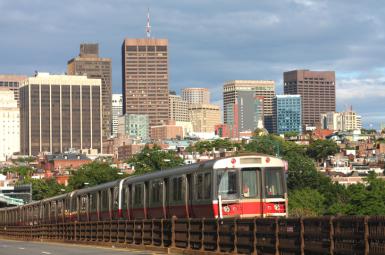
Will MBTA Labor Shortages Impede its Future?
Following a startling $11.5 billion surge in FY 2021 and FY 2022, tax revenues for this year and next settle into a lower and slower growth pattern as global risks escalate. MTF projects that FY 2023 revenues will top the $39.62 billion benchmark by $75 million and grow to $40.06 billion in FY 2024, an increase of $366 million or approximately 1 percent over FY 2023.
Authored by: Andrew Bagley