While there is no going back to the pre-pandemic patterns of living and working from 2019, Urban Economies on the Precipice: A Tale of Six Cities examines six major cities with similar profiles, Boston, Chicago, New York, Philadelphia, San Francisco and Washington, D.C., detailing the disruptions and making recommendations to inform Massachusetts about which policies may work and on what schedule.
A related and revealing statistic: Economic output in the Northeast and Mid-Atlantic states fell below that of six big southern states (Florida, Georgia, North Carolina, South Carolina, Tennessee, and Texas) in 2021, and the gap is only getting wider. Not coincidentally, the population in those southern states is expanding.
The Massachusetts Taxpayers Foundation has highlighted all this in a new presentation called “Urban Economies on the Precipice: A Tale of Six Cities.”
- Read more about Boston’s economic rebound hindered by vacant office space, remote work, report finds
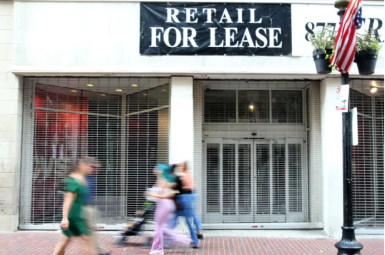
A new report paints a sobering picture of what the shift to remote and hybrid work could do to the city’s economy in the months and years ahead, given the reduction in foot traffic and spending seen in the downtown since the pandemic.
“Urban Economies on the Precipice: A Tale of Six Cities,” a report issued Friday by the Massachusetts Taxpayers Foundation, examines the post-pandemic challenge Boston and five other major cities face in replacing worker-driven economies and managing the impacts of vacant office buildings.
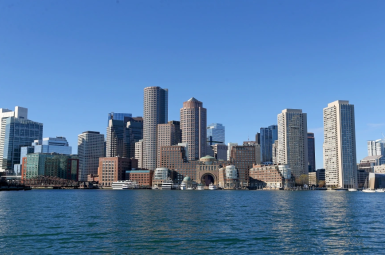
As cities like Boston continue to navigate changes in urban economies resulting from the ongoing pandemic recovery, a new report from the Massachusetts Taxpayers Foundation (MTF) details the challenges and opportunities that lie ahead. Urban Economies on the Precipice: A Tale of Six Cities examines six major cities with similar profiles that drive regional economies – Boston, Chicago, New York, Philadelphia, San Francisco, and Washington, D.C. – to detail the changes and make recommendations to inform Massachusetts about which polices may work and on what schedule.
Over the last two years, the federal government has made unprecedented investments in transportation, climate resiliency, and economic development infrastructure through three pieces of legislation: the Infrastructure Investment and Jobs Act (IIJA), the Inflation Reduction Act (IRA), and the Creating Helpful Incentives to Produce Semiconductors Act (CHIPS). Combined, these three bills include over $2 trillion in spending, nearly half of which will be made available to states through competitive grant programs and formula allocations over the next five to ten years.
The Massachusetts Taxpayers Foundation report said U.S. Census Bureau data shows Suffolk and Middlesex County residents left at the highest rates. And 2021 tax returns for 2020 showed residents aged 26 to 35 were the largest group leaving, according to the foundation.
Analysts can have discussions over what the drivers of outmigration are, said Massachusetts Taxpayers Foundation President Doug Howgate, but data shows the state has lost population.
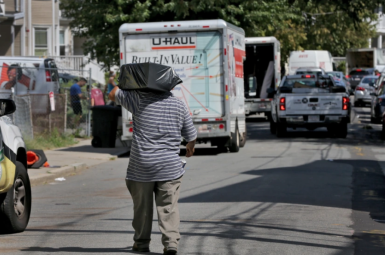
Massachusetts is hemorrhaging people. In fact, it’s seeing the highest outmigration numbers in the last 30 years, according to a new report from the Massachusetts Taxpayers Foundation. A net 110,000 people moved out of the Bay State over roughly the first two years of the pandemic within the United States, most of them between the ages of 26 and 35.
2021 tax returns showed nearly 38,000 Massachusetts residents between the age of 26 and 35 moved out of the state in 2020.
"You expect to see 26- to 35-year-olds move in and out a lot," said Massachusetts Taxpayers Foundation President Doug Howgate. "But the fact that it's the biggest loss sector ... that's a concern for that long-term workforce pipeline."
That kind of loss in the labor force impacts the state's ability to support its economy, he said.
Driving the news: The report from the Massachusetts Taxpayers Foundation found that a long-term decline in births and an aging population is also shrinking the Massachusetts workforce.
- Plus, remote workers don't want to live in such a high-cost area if they don't have to.
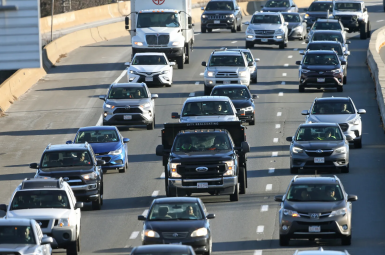
- And when commuters do need to get to work, they are met with poor roads and an aging train system.
The Massachusetts Taxpayers Foundation found that more than 110,900 people left the state between April 2020 and July 2022. And some of the trends pushing residents out of Massachusetts might sound all too familiar to those still here.